
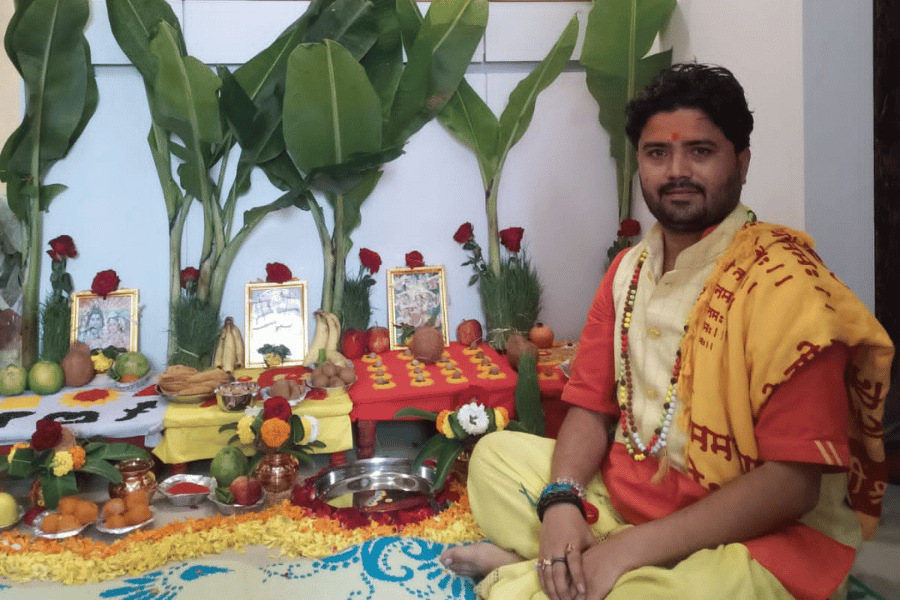
Puja is performed with prayer to one or more deities, to host and honor a guest, or to spiritually celebrate an event in a temple or at home. The worshipper prepares an altar with offerings such as flowers, fruits, and incense sticks. The deity is then invoked through the chanting of mantras and hymns. The worshipper then offers the deity food, water, and other items as a sign of respect and devotion.
The purpose of puja is to establish a connection between the worshipper and the divine. It is believed that the deity is present in the image and sees the worshipper. The interaction between human and deity, between human and guru, is called darshan, seeing.
Puja is done on a variety of occasions, frequencies, and settings. It may include a daily puja done in the home, or occasional temple ceremonies and annual festivals. In other cases, puja is held to mark a few lifetime events such as the birth of a baby, house entering ceremony or grihapravesh, first rice-eating ceremony or annaprasana, wedding, sacred thread ceremony or upanayana ceremony for the Brahmins or to begin a new venture.